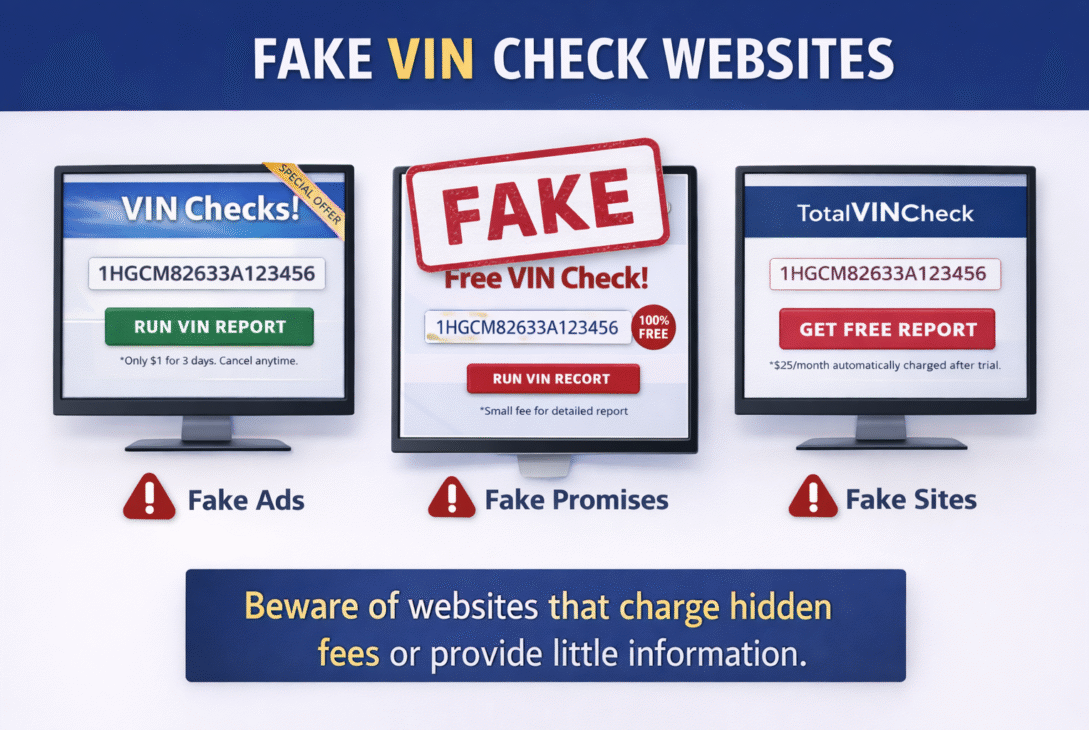
VIN Check Scams: Complete Guide
Checking the vehicle history reports is one of the most critical steps while buying or selling a used car. Scammers have built hundreds of fake VIN check websites designed to dupe users into paying for useless reports or providing sensitive financial information.
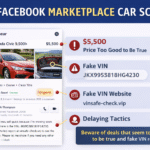
Many of these scams are aimed at people selling vehicles on online marketplaces like Facebook Marketplace or Craigslist.
This guide breaks down some of the most common warning signs, as well as examples of VIN report websites that been associated with scams or suspicious activity.
For more information on how these scams operate as a whole, see our VIN Check Scams: Full Guide.
VIN Scam Guides
- Vin Check Scams
- $1 VIN Report Scam
- VIN Cloning Fraud
- Facebook Marketplace Car Scams
- How to Verify VIN Reports
Why Fake VIN Report Websites Exist
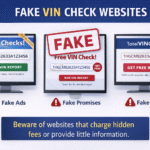
Fraudulent Vehicle VIN report websites are designed to take advantage of people who want to check a vehicle’s ownership history before making a purchase.
One common tactic used by fraudsters is to contact a seller of a vehicle and claim they will need to buy a report from certain site before closing the deal. This website is typically either owned or generates a profit for the scammer.
Once they buy the report, the scammer disappears and the report usually contains few or no real details about the vehicle.
Such scams have proliferated in recent years, as online car sales have increased.
Examples of Fake or Suspicious VIN Check Websites
Below are examples of VIN report websites that have been linked to scams, complaints, or suspicious activity online.
⚠️ Important: Some websites may appear legitimate but still use misleading practices or hidden subscription charges.
Reported Scam VIN Websites
Examples reported in scam investigations include:
Investigations have shown that some of these websites provide generic reports with no legitimate vehicle data.
Other sites use brand names similar to legitimate providers in order to confuse consumers.
Other Suspicious VIN Report Sites Reported by Users
Users on scam reporting forums have also warned about sites such as:
These websites were commonly promoted by scammers pretending to be interested buyers.
Many victims reported that scammers insisted they purchase reports from these specific websites before completing a vehicle transaction.
How to Check if a VIN Website Is Legitimate
To avoid scams, take the following precautions.
✔ Search for reviews before using the website
✔ Verify whether the service is listed as an approved VIN data provider
✔ Avoid unknown websites sent by buyers or sellers
✔ Compare reports from multiple trusted providers
Consumer protection organizations recommend verifying VIN report providers before entering payment information online.
What To Do If You Encounter a VIN Report Scam
If you think you have come across a fraudulent VIN report site:
- Do not talk to the suspected scammer.
- If payment details were entered, contact your bank.
- File a complaint with consumer protection agencies.
- Inform other users about the fraud.
Reporting scams helps protect others from being taken as well.
Final Thoughts
Used cars are in short supply, and so too are fake VIN check websites. One of the more common scams takes advantage of vehicle history report process in order to manipulate individuals into providing payment for services that do not exist or divulging sensitive information.
So before you buy any VIN report, check the website, and refrain from using services that are suggested by dubious buyers or sellers.
Being aware and vigilant is the best defense against vehicle history report scams.