VIN Check Scams: Complete Guide
How to Avoid Them
It has never been easier to buy and sell cars online. Facebook Marketplace is one of the most common locations for purchasing used vehicles.
But scammers often take advantage of the platform to prey on both buyers and sellers. The scams can be fake listings, cloned vehicles or VIN report scam sites.
Knowing how these scams function can save you from losing money.
If you need an in-depth explanation of VIN related scams, our full guide to VIN check scams is also available on this site.
VIN Scam Guides
- Vin Check Scams
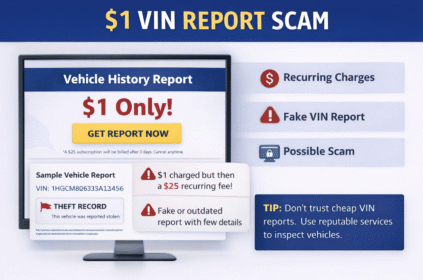
- $1 VIN Report Scam
- VIN Cloning Fraud
- Facebook Marketplace Car Scams
- How to Verify VIN Reports
Why Facebook Marketplace Car Scams Are Common
There are several reasons online marketplaces appeal to scammers:
- Large number of buyers and sellers
- Limited identity verification
- Quick communication through messaging
- Pressure to close deals quickly
During vehicle transactions, experts say fraudsters often use trust and urgency to manipulate victims.
6 Most Common Facebook Marketplace Car Scams
Here are some of the most common scams people encounter when buying or selling cars online.
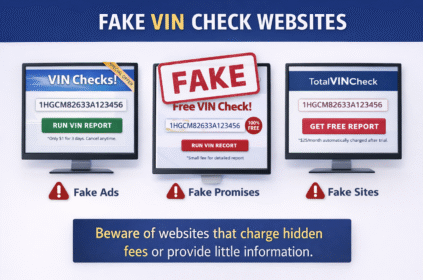
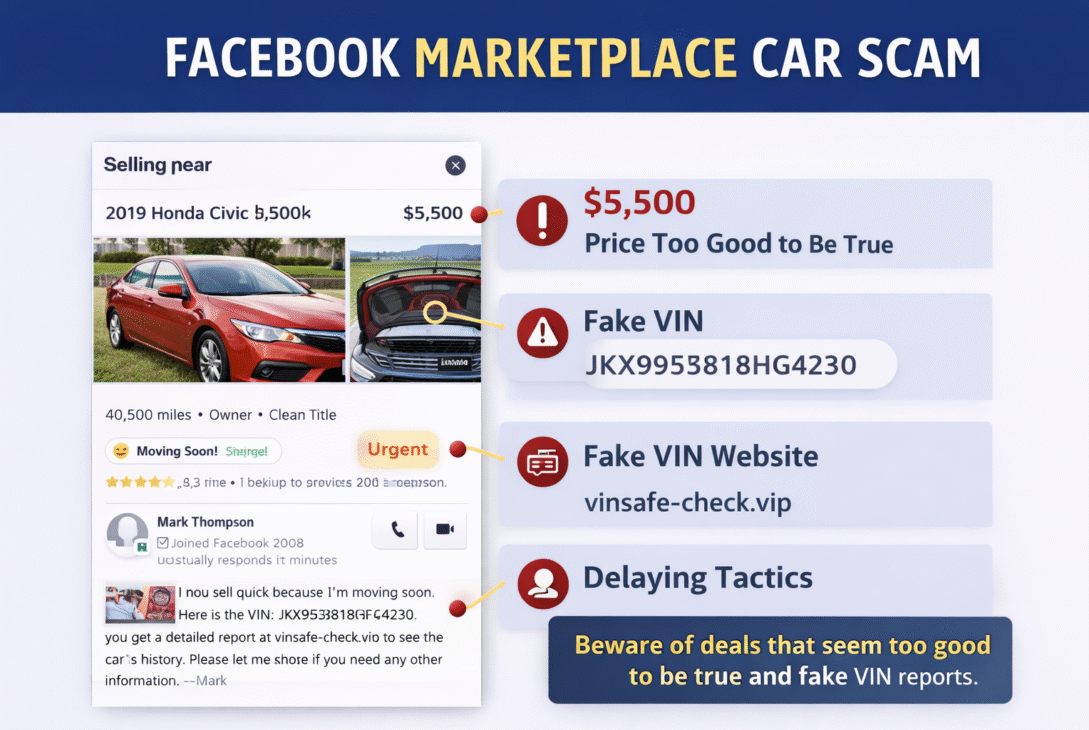
1. The Fake VIN Report Scam
This is one of the most common scams targeting car sellers.
How it works
- You list your vehicle for sale.
- A buyer contacts you and appears interested.
- They ask you to purchase a VIN report from a specific website.
- After you buy the report, the buyer disappears.
Many of these websites are fake and exist only to collect payments or financial information.
2. Deposit or Reservation Scam
This scam targets car buyers.
The seller claims there is high demand for the vehicle and asks for a deposit to reserve the car. Once the payment is sent, the seller disappears.
Research on online car transactions found that deposit scams are one of the most common fraud tactics on marketplaces.
3. Fake Vehicle Listings
Some scammers create listings for vehicles they do not own.
Common warning signs include:
- Extremely low prices
- Stock photos instead of real images
- Sellers refusing to show the vehicle in person
If a deal seems too good to be true, it probably is.
4. VIN Cloning Scam
In this scheme, criminals copy the Vehicle Identification Number (VIN) from a legitimate vehicle and place it on a stolen car.
The cloned vehicle appears legitimate in databases, making it easier to sell to unsuspecting buyers.
Authorities have uncovered VIN-cloning operations where stolen vehicles were sold through online marketplaces at unusually low prices.
5. Fake Escrow or Payment Services
Some scammers direct buyers to fake payment or escrow websites.
These sites claim to hold the money safely until the buyer receives the vehicle. In reality, the website is controlled by the scammer and the money disappears after payment.
6. Communication Outside the Platform
Scammers often try to move conversations away from the marketplace messaging system.
For example, they may ask to continue communication through:
- SMS
Moving conversations outside the platform makes it harder for the platform to detect and prevent fraud.
How to Protect Yourself
Here are some safety tips to follow in order to decrease the chances of being scammed:
- Inspect the vehicle in person
- Always view the vehicle before any payment is made.
- Verify the VIN
- Use a reputable vehicle history report service and enter the VIN.
- Avoid sending deposits
- And never send money before verifying that the vehicle exists.
- Meet in safe locations
- Law enforcement recommends conducting buyer-seller meetings in an observed public place.
- Keep communication on the platform
Don’t take the conversation off to an external messaging app early.
What To Do If You Encounter a Scam
- Stop communicating with the person immediately.
- Report the listing or user to Facebook.
- Avoid sending money or personal information.
- Warn others about the suspicious listing.
Reporting scams helps prevent other users from becoming victims.
Final Thoughts
Facebook Marketplace has become a very convenient and easy place to buy and sell vehicles, however, it is also a haven for scammers who want to take advantage of those unaware users.
Understanding how common car scams work and spotting warning signs early can help buyers and sellers protect themselves —and make safer vehicle transactions online.
Taking a few additional precautions — like checking VIN numbers, seeing vehicles in person and avoiding suspicious payment requests — can greatly diminish the chances of being scammed.