VIN Check Scams: Complete Guide
How to Identify Them
When you buy or sell a second-hand car online you may come across sites to get vehicle history reports or VIN checks. Many of these services are real, but some have been designed just to con people.
Fraudulent VIN check websites are becoming increasingly prevalent and have been created specifically to try to deceive users into buying worthless reports or providing their personal information.
For a more in-depth explanation of these scams, you can also read our full guide to VIN check scams here.
What are Fake VIN Check Websites?
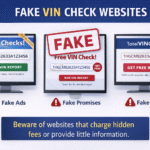
Fake VIN check sites pretend to provide vehicle history reports summarizing key aspects of a car’s past, including records for accidents, title status and mileage history.
In fact, those websites you see mostly churn out generic or even fake reports that were not based on their actual vehicles. Some scammers even set up whole networks of fake sites with very similar designs to shower payments for unsuspecting users.
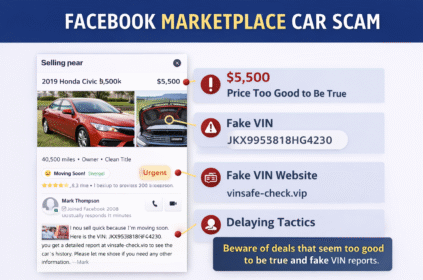
These sites are often advertised by scammers contacting people trying to sell cars and demanding the seller pay for a report from their choice of site before any sale can go ahead.
The prospective buyer never reappears after the payment.
VIN Scam Guides
- Vin Check Scams
- $1 VIN Report Scam
- VIN Cloning Fraud
- Facebook Marketplace Car Scams
- How to Verify VIN Reports
How Fake VIN Check Scams Typically Operate
Fake VIN report scams tend to proceed in a predictable pattern.
You list your car online
You can advertise your car on Facebook Marketplace or other ad sites.
- A buyer contacts you
- He shows interest in buying the car, and has questions about its condition.
- They request a VIN report
- The buyer tells you to buy a vehicle history report from a certain website they suggest.
- You pay for the report
- You enter all your payment info, and you get a useless report or no report at all.
Some of these bogus sites also ask for payments of $20–$60 dollars, in addition to collecting credit card information that can be used for fraud later.
How to Spot a Fake VIN Check Website
Knowing the warning signs can help you avoid becoming a victim.
The buyer wants a particular website
Serious buyers will usually lean on reports from reputable providers. A major red flag is if someone is demanding you use a website you haven’t heard of.
Extremely cheap VIN reports
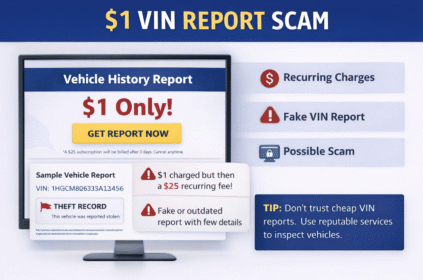
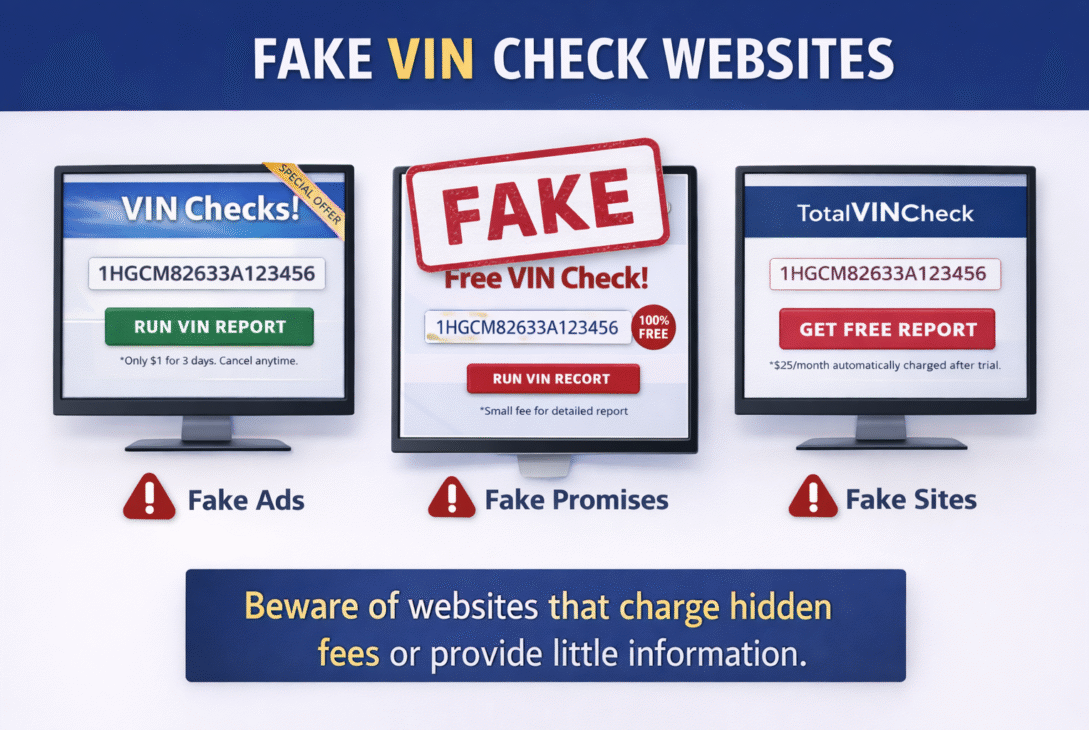
Other scam websites will advertise reports for $1 or very low prices to attract their victims.
Suspicious domain names
Most fake VIN check sites have odd endings like “. vin” to appear legitimate.
Generic or incomplete reports
These fake reports usually contain lots of boilerplate information and very little vehicle data.
High-pressure tactics
Scammers might pressure you by saying the purchase needs to be made quickly.
Common Fake VIN Report Scams
There are several different types of fake VIN web sites.
Subscription traps
A few websites offer an initial fee that seems small, only to auto-enroll people in expensive recurring subscriptions.
Phishing websites
These sites take credit card numbers, emails and more personal information for identity theft.
Fake NMVTIS claims
Others are fraudulent services that pretend to use official vehicle databases but have no authorization to do so.
How to Check if a VIN Check Service is Authentic
Here are the precautions to take before buying a vehicle history report:
- Use reputable VIN report providers.
- Be skeptical of sites that unknown buyers or sellers recommend.
- Ensure that the service is listed on official vehicle history provider websites.
- Check their online reviews before entering your payment information.
They also suggest steering clear of links offered by buyers or sellers you don’t know, and instead using trusted report providers.
What If You Used a Fake VIN Site?
If you think you have used a fraudulent VIN check service:
- Call your bank or credit card company right away.
- Cancel any recurring subscriptions.
- Keep a close eye on your financial statements for suspicious activity.
- Report those scams to consumer protection agencies.
Acting fast can help minimize your risk of losing money or having your identity stolen.
Final Thoughts
Counterfeit VIN Check Websites — Gradually, Our Online Purchases Are Becoming the New Normal Pressure tactics and convincing-looking websites are part of the schemes that fool people into paying for pointless reports.
(If you know what to look for, though, and choose VIN check providers wisely, you can avoid fraud and make smarter choices when selling or buying a car online.)